
February 24, 2026
Heavy equipment moving is the process of planning, lifting, loading, securing, transporting, and setting heavy machines into a new position or facility. It sounds straightforward, but small mistakes can lead to big damage, injuries, or shutdowns.
Key Summary
- Heavy equipment moving starts with a site plan, load data, and the right rigging method.
- Use qualified riggers when the job calls for it, and follow OSHA requirements for crane and rigging work.
- Before transport, lower and secure accessories, and restrain articulation, FMCSA cargo securement rules call this out for heavy equipment.
- Keep people out of the fall zone, and treat struck by hazards as a top risk during moves.
What “heavy equipment moving” entails
In industrial settings, heavy equipment moving usually includes four phases.
- First is planning, measuring access, checking floor capacity, mapping the travel path, and confirming weights and lifting points.
- Second is rigging and lifting, where the equipment is picked or supported using cranes, forklifts, gantries, jacks, skates, rollers, or a mix.
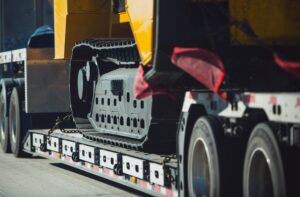
- Third is transport, which might be moving across a facility, across a yard, or on public roads with a trailer.
- Fourth is placement, setting the equipment, leveling, anchoring, and confirming clearance and utilities.
Atlantic Millwrights supports these projects with professional rigging services when equipment needs to be moved, set, or relocated safely.
Why heavy equipment moving is high risk
There are two reasons. The loads are heavy, and the work happens near people, structures, and pinch points.
Struck by incidents are a major safety concern in work environments where loads are lifted and guided. The National Safety Council notes about 700 workplace deaths per year due to struck by object incidents.
And once you are on the road, the consequences of a mistake go beyond the jobsite. In 2023, 5,472 people were killed in traffic crashes involving large trucks, and 70 percent of those killed were occupants of other vehicles.
Collect the facts before anyone touches the machine
This is where good moves start. Get clear answers to the questions below, then write them down and share them with the crew.
Know the weight and the center of gravity
Use the manufacturer data plate, manual, or approved documentation. If the weight is unknown, treat it as unknown, and do not guess. Underestimating weight is how lifts get sketchy fast.
Also note where the center of gravity is, if it is off center, the rigging plan needs to account for it or the load can tilt and swing.
Confirm lift points and equipment condition
Identify rated lift lugs, forklift pockets, or engineered pick points. If the machine is damaged, modified, or missing key components, that can change the plan.
Map the path and the ground or floor capacity
Check doorway heights, turning radius, overhead obstructions, ramps, drains, trench plates, and floor loading limits. A move can fail even if the lift is perfect, because the path was not.
Build a rigging plan that matches the risk
A rigging plan does not need to be fancy, it needs to be clear. At minimum, it should spell out the method, the equipment, who is in charge, and what the stop work triggers are.
Use qualified people when the work requires it
OSHA’s crane and derrick rules include requirements for “qualified riggers” in specific situations, and OSHA also defines what “qualified” means in this context.
Even when a rule does not explicitly call it out for a specific move, it is still a practical standard. If the job involves complex picks, blind picks, tandem lifts, or tight tolerances, you want a qualified rigger and an experienced signal person.
Choose the right method, crane lift vs. roll vs. jack and slide
Not every move needs a crane. Sometimes the safest option is a controlled jack and skate move, because you reduce the time the load is suspended. Other times, a crane is the only workable option. The “right” method is the one that controls the load best for the conditions you have.
Inspect rigging gear and follow recognized standards
Rigging hardware and lifting devices are commonly managed using ASME B30 standards, and overhead crane guidance is often aligned with CMAA standards for safe design, inspection, and maintenance practices.
The key point is simple, gear condition matters. Hooks, slings, shackles, and other components need inspection at appropriate intervals and removal when they do not meet criteria.
Control the jobsite hazards that cause injuries
Keep people out of the fall zone
The fall zone is where the load could land if something fails. Do not let anyone stand under a suspended load, or inside pinch points where the load could swing or shift. If someone has to guide a load, use tag lines and positioning that keeps them out of the line of fire.
OSHA training materials on struck by hazards show how often crane loads and crane related events cause serious incidents, and why exclusion zones matter.
Communicate with one signal, one plan
Pick one signal person and stick with it. Mixed signals cause sudden moves, and sudden moves break things. If visibility is limited, use radios with clear, short calls and a repeat back rule.
Lockout and make stored energy boring
Before moving equipment, isolate energy sources. That includes electrical, pneumatic, hydraulic, steam, gravity, and anything else that can release energy unexpectedly. “Off” is not the same as “isolated.”
Plan for rigging failures and stopping conditions
Call out what triggers a stop. Examples include unexpected tilt, abnormal sounds, binding, or losing sight of the load. A crew that stops early prevents the bad day.
Follow transport rules for securing heavy equipment
If the equipment is going on public roads, you are now in a cargo securement world. The rules get specific for heavy machinery, especially for tracked or wheeled equipment over 10,000 lb.
FMCSA cargo securement rules for heavy vehicles and equipment cover prep and securement. They call out basics like lowering and securing accessory equipment, and restraining articulated vehicles to prevent articulation in transit.
Basic transport checks that prevent common failures
- Make sure booms, buckets, blades, and attachments are fully lowered and secured, per the securement rules.
- Confirm the trailer deck, ramps, and tie down points are rated and in good shape.
- Verify load distribution. Axle loads and the center of mass matter for control and braking.
- Use appropriate tie down methods and quantities for the equipment type and weight class. If you are not sure, treat that as a red flag and get a qualified person involved.
Set and verify, do not rush the last 10 percent
Most damage happens during the final placement, when people feel like the job is “basically done.” This is when loads get nudged, pried, or rushed into position.
Set the equipment slowly. Confirm the foundation or pad is correct. Verify level. Check anchor points. Confirm clearance for panels, service access, and ventilation. If the equipment interfaces with piping or electrical, align without forcing, forcing creates future failures.
When to bring in a rigging partner
If any of the points below are true, it is usually time to involve an experienced rigging team.
- The equipment weight is unclear, or the center of gravity is unknown.
- The pick is blind, tight, near production assets, or near energized systems.
- The move requires cranes, gantries, jack and slide systems, or a complex path across floors, trenches, or uneven ground.
- The equipment is high value, one mistake would shut down operations, or placement tolerance is tight.
These are the projects where professional rigging services pay for themselves by reducing risk and downtime.
Frequently Asked Questions
What is heavy equipment moving?
Heavy equipment moving is the safe relocation of large machines using rigging, lifting, and transport methods, including planning, lifting or rolling, securing for transport, and final placement.
What are the most common hazards during heavy equipment moving?
The most common hazards are struck by incidents, caught in or between pinch points, suspended load failures, and tip overs during lifting or rolling. This is by no means a comprehensive list of hazards, but the most commonly encountered ones. Consult a professional for a more detailed list.
Do you need a qualified rigger for heavy equipment moving?
Sometimes, yes. OSHA crane rules identify situations where a qualified rigger is required, and OSHA defines what “qualified” means. Even when not explicitly required, a qualified rigger is a best practice for complex or high risk moves.
What do cargo securement rules say about transporting heavy equipment?
FMCSA cargo securement rules for heavy equipment (including §393.130) call for preparing equipment for transport, such as lowering and securing accessory equipment, and restraining articulation so the machine cannot move unexpectedly in transit.